



For more than four decades, Irv “Klem” Klemmensen has been a central figure at Jacksonville Municipal Airport, turning wrenches on aging Cessnas, state police aircraft, and antique planes few others in Central Illinois are willing—or qualified—to touch. Now 80 years old, a disabled Vietnam veteran, and one of the region’s last general aviation mechanics, Klemmensen is facing eviction from the hangar he has occupied since 1991.
The Jacksonville Airport Authority voted at their December 9 meeting not to renew Klemmensen’s month-to-month lease, ordering him to vacate the large maintenance hangar by January 15, 2026 with his customers’ ordered to have their items removed by December 31. The decision has sparked sharp disagreement between airport officials and members of the aviation community, raising questions about airport governance, FAA compliance, and the future of general aviation services in Jacksonville.

A Mechanic and an Airport Grow Together
Klemmensen’s aviation career opened with Klem’s Aero Repair in 1982 after he spent early years working first in Beardstown. He eventually moved into the large 15,000-square foot hangar west of the terminal, where he has been in continuous operation. Over the years, he became the primary mechanic for dozens of private pilots across the region and maintained aircraft for the Illinois State Police, a relationship dating back to 1982.
Supporters say his business helped make Jacksonville a destination airport for maintenance and restoration, bringing in aircraft from Springfield, Beardstown, Pittsfield, Jerseyville, and beyond—traffic that contributed to the airport’s ability to secure federal and state grants.
“Aircraft mechanics for small planes are almost impossible to find,” said John Oakes, an A&P mechanic who has worked with Klemmensen for decades. “If Clem leaves, that’s it for general aviation here. People will just sell their planes.”
The Airport Authority’s Case
Airport officials say the eviction is not personal, but procedural.
“The board has had issues with Irv for several years,” said Dan Beard, secretary of the Jacksonville Airport Authority and its attorney. “He’s been on a month-to-month tenancy, and when we were unable to reach an agreement after giving him plenty of time, the board exercised its right to terminate that tenancy at their board meeting in December.”
In an October 31 Notice to Cure Default, the Authority cited multiple alleged lease violations, including:
- Storage of trailers and vehicles outside and inside the hangar
- Allowing non-aeronautical activities, including woodworking done by Eldon Walters
- Allowing others to conduct aircraft work without proper authorization
- Subleasing or unauthorized access
- Security concerns related to hangar access and gate use

Airport officials argue that FAA grant assurances require strict enforcement of aeronautical-use rules, particularly as the airport pursues millions of dollars in federal and state funding for infrastructure projects, including terminal renovations that are estimated to cost over $1 million.
“The FAA is very clear that you can’t have non-aeronautical activities going on in hangars,” Beard said. “We have to protect the airport’s eligibility for grants and manage liability.”
Beard has also said the board may still entertain a new lease if Klemmensen agrees to extensive conditions, including restricting hangar access, removing third-party aircraft and equipment, and limiting activities to those performed directly by Klemmensen or a formally designated employee.
Klemmensen’s Response
Through his attorney, Heidi Scott of Mt. Sterling, Klemmensen disputes nearly every allegation in the notice of default, arguing that the Authority misunderstands both FAA regulations and long-standing industry practice.
In a detailed November 18 response letter, Scott wrote that:
- The trailers cited were legally registered, used for aircraft recovery, and parked in authorized vehicle spaces
- Woodworking equipment in the hangar is primarily used to fabricate aircraft parts, with incidental hobby projects not displacing aeronautical use
- Customers such as Dan Maggart and John and Charlie Oakes were not subleasing space but working on aircraft under Klemmensen’s supervision, a common FAA-accepted practice
- Vehicles stored inside the 15,000-square-foot hangar occupy roughly 3% of the space and do not interfere with aircraft operations
- FAA policy explicitly allows incidental non-aeronautical use so long as it does not interfere with primary aeronautical functions
Scott also emphasized that many of the practices now cited as violations were known to—and tacitly accepted by—prior airport boards for decades. Scott and others believes the stepped up enforcement has been spurred on by a vendetta by the board and Airport management.
“Mr. Klemmensen has operated in compliance with federal, state, and local regulations for over 40 years,” Scott wrote. “There has been no violation in spirit or in fact.”
A Dispute Years in the Making
Both sides acknowledge that tensions escalated following a confrontation approximately 5 years ago between Klemmensen and airport manager Shastin Saxer. According to multiple interviews, Klemmensen questioned the purchase of a new truck and John Deere gator while the airport terminal sat in disrepair, suffering from mold and exposed framing.
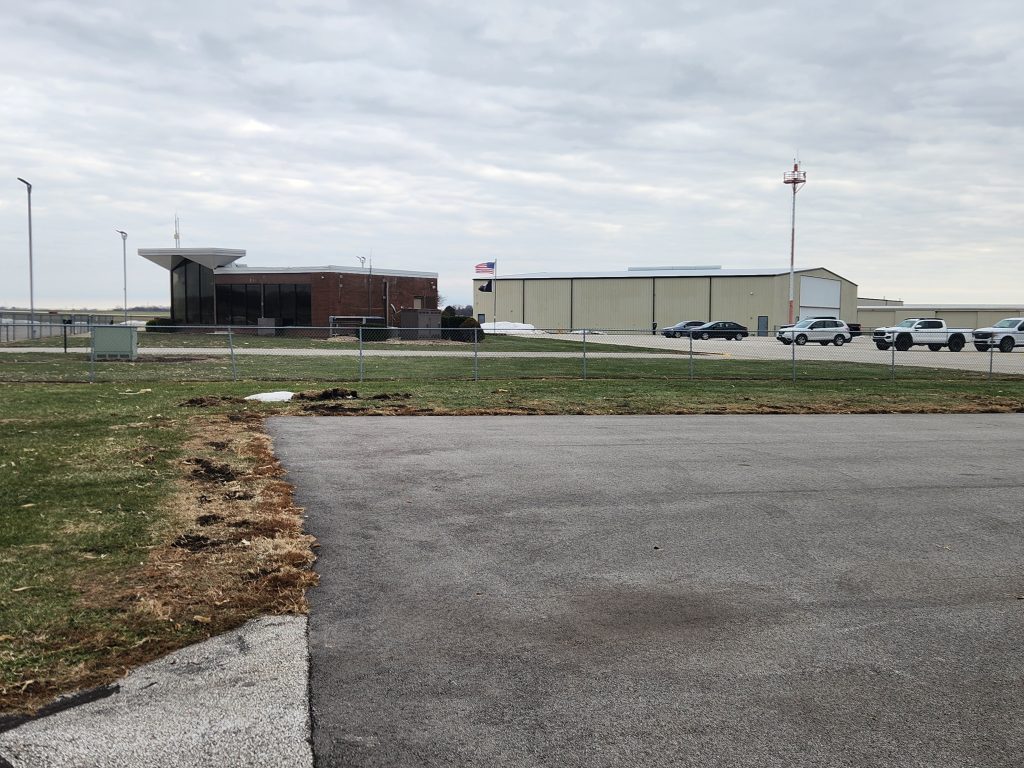
Klemmensen says that conversation marked a turning point.
“I just asked why,” he said. “Why spend money on trucks and gators when the terminal looks like a disgrace? That’s all I asked.” A response to this accusation has been sent to Saxer through the Airport’s website and has not been returned as of press time. Klemmensen and his customers say retaliation in the form of regulations have been constant ever since.
Airport officials dispute claims of retaliation, saying enforcement actions stemmed from compliance concerns, not personal animosity. Beard noted a recent citation by aviation regulators about a gate that was left open near Klemmensen’s hangar prior to the new, electronic gates being installed. Klemmensen and others have said that the prior gate had mechanical issues and was often physically hard to handle. In legal correspondence, Klemmensen’s attorney has acknowledged appreciation for the repair of the gate. Still, internal correspondence from December acknowledges that compliance alone was not the sole factor in Klemmensen’s eviction, with some board members stating dissatisfaction with Klemmensen’s operations and relationships at the hangar.
Impact on the Aviation Community
The eviction has unsettled pilots and mechanics who rely on Klem’s Aero Repair. Several say they are considering selling their aircraft or relocating to other nearby municipal airports if Klemmensen leaves.
One aircraft restored by Dan Maggart in Klemmensen’s hangar recently won recognition at the Oshkosh, Wisconsin fly-in, highlighting the specialized work taking place in Jacksonville—work supporters argue cannot be easily replaced or replicated elsewhere.
There is also concern about Klemmensen’s Illinois State Police maintenance contract, which runs into mid-2026 and could be disrupted if the eviction proceeds. Dan Beard says he remains hopeful that something between the Airport Authority Board and Klemmensen can be worked out to extend the lease agreement.
What Comes Next
As of mid-December, the Airport Authority has left the door open to negotiations, but only if Klemmensen meets a sweeping list of conditions by December 31—requirements his supporters say would effectively dismantle his business and control his customer base.
For now, the eviction stands, with a January 15 deadline looming with others operating in the hangar being told that they must leave by the end of the month.
At its core, the dispute reflects a broader tension facing many small municipal airports: balancing modernization, compliance, and grant funding against the informal, relationship-driven businesses that kept these airports alive for decades.
For Klemmensen, the question is more personal. “How do you evict 40 years of work in the middle of winter?” he asked. “You can’t.”
Whether Jacksonville Municipal Airport can preserve both regulatory compliance and the legacy of one of its longest-serving tenants remains an open—and increasingly urgent—question.